Draining and Storing an Inflatable Hot Tub for Winter Without Damaging It
As an Amazon Associate we earn from qualifying purchases. This page contains affiliate links — if you buy through them, we earn a small commission at no extra cost to you.
Mould growing inside the liner folds from residual moisture is the most common winter storage failure, typically requiring a complete liner replacement that costs hundreds of pounds. The sequence that prevents this—draining, drying, and frost-free storage—is straightforward but demands attention to detail most guides skip.
The Winter Decision: Store or Run Through Cold Months
Every inflatable hot tub owner faces the same choice as temperatures drop. You can either drain, dry, and store the tub, or keep it operational through winter with intensified maintenance. Both approaches have merit, but one involves considerably more ongoing cost and risk.
Drain and store indoors means winterising the tub completely, bringing components inside, and reassembling in spring. The initial time commitment is real—expect a couple of hours for a thorough job. Once stored, there’s no monitoring, testing, or electricity consumption.
Keep it running through winter requires a deep clean, chemical top-up, and maintaining temperature. The appeal is obvious: spontaneous use remains possible. The downsides are less apparent but substantial.
Any winter strategy must achieve three things: protect against freeze damage, prevent biological degradation (mould, bacteria), and manage energy costs if running. Evidence strongly favours storage for most UK owners. When water freezes, it expands by about 9%—a fact verified by multiple scientific sources. This expansion within sealed fittings has nowhere to go, risking damage to liners, pipes, and pump connections.
The costly repairs often follow an assumption that a mild winter means risks are low. But water trapped in the pump’s narrow internal pathways is vulnerable even to a brief cold snap. For owners with light or occasional winter use planned, draining and storing represents the safer default—a few hours of work versus potential four-figure repair bills.
If draining due to poor water quality, address the underlying issue before refilling in spring. The Free Hot Tub Water Checklist covers essential pre-startup checks.
Executing the Drain and Dry Process
This phase is where most storage problems originate. Following the correct sequence prevents mould and component damage.
Complete drainage starts at the drain plug on the liner’s bottom. Attach the garden hose adapter, run the hose to a drain, and remove the plug. Let gravity empty the tub completely—rushing leaves residual water that causes problems.
Pump disconnection comes next. Turn off and unplug the pump, then detach it from the liner. Never store them connected for months; weight and moisture create issues.
Pump flushing involves running clean water through the housing via a garden hose to remove dirt, scale, and chemical residue. Skipping this allows contaminants to congeal over winter.
Removing trapped water is the most overlooked step. After flushing, tilt the pump forward and use the inflation hose to blow air through inlet pipes, expelling any remaining water. Do this outdoors to see what emerges.
Surface drying requires wiping the entire liner with a clean cloth, then moving it indoors (spare room, dry garage) to air for a couple of days. The liner must be completely dry to the touch, with no dampness in folds, before packing. Manufacturer guidance emphasises thorough drying before storage.
A specific point from maker instructions: the heater unit’s base should not rest directly on the liner during long-term storage. The weight and potential heat cycling can distort the vinyl material over months.
The filter cartridge should be removed, cleaned, and dried separately. If it’s near the end of its lifespan after a heavy summer, replace it now rather than discovering a collapsed filter in spring.
The Non-Negotiable Drying Imperative
It might seem like “just a bit of damp,” but summer conditions differ completely. Warm, circulating water prevents stagnation. Winter storage creates a different environment entirely.
When a liner sits folded with trapped moisture, British winter temperature fluctuations cause condensation inside the folds. This moisture supports biological activity in the dark, relatively warm environment. Within weeks, a musty smell upon unpacking signals mould establishment.
Mould doesn’t just create odours—it degrades vinyl from the inside, making the liner brittle, weakening seams, and shortening the usable life of your investment.
Beyond the liner, pipework and filter housing harbour contaminants like body oils and sunscreen residue that don’t fully flush with a quick drain. Before seasonal storage, running a dedicated pipework flush product through the system is worthwhile. These products help ensure fresher water upon refilling.
The cost comparison is stark. A proper flush and two-day drying programme involves minimal chemical cost and a weekend couple of hours. A mouldy liner or moisture-seized pump requires expensive replacement—potentially the entire tub if the liner is compromised.
Assessing the Running Cost Alternative
The argument for keeping a tub running through winter centres on convenience: why drain when you can maintain readiness? The honest answer depends heavily on actual usage patterns and electricity costs.
Inflatable spas lack the insulation of acrylic or hard-sided models. Their vinyl walls lose heat faster, causing the heater to cycle more frequently. Each cycle draws power.
A well-fitted inflatable cover significantly helps by providing the insulation the walls cannot. A worn or ill-fitting cover forces the heater to work harder. Replacing a tired cover before winter is more economical than paying to heat around gaps.
Typical inflatable spa heaters draw 1.5-2 kW when active. How often they run depends on ambient temperature, cover quality, and set temperature. At current UK energy rates, winter operation can add a noticeable amount to bills—often surprising new owners who expected appliance-level costs.
For light or occasional use, draining and storing is clearly cheaper—no power or chemical costs. For heavy, regular winter use, maintaining operation avoids winterising hassle but incurs real energy expenses. When uncertain, the default should be drain and store.
Compromise: Outdoor Storage Without Indoor Space
Not everyone has spare indoor space. Outdoor storage is possible but requires accepting higher risks.
A sheltered spot away from direct wind and rain serves as a practical fallback. The cover becomes critically important—it must be properly sealed against rain, leaves, and damp air.
The accepted risk increases. Wind can introduce moisture under a loose cover. Frost on the cover itself isn’t problematic, but any water that gets underneath will pool at the lowest point—potentially the pump connection or drain valve, recreating freeze-damage scenarios.
Outdoor storage represents a compromise that might work in mild UK areas with genuinely sheltered placement and acceptance of higher moisture-related spring risks. If any indoor option exists—even rented storage—it’s worth the effort.
For more on effective covers for outdoor conditions, see our guide to hot tub covers for insulation.
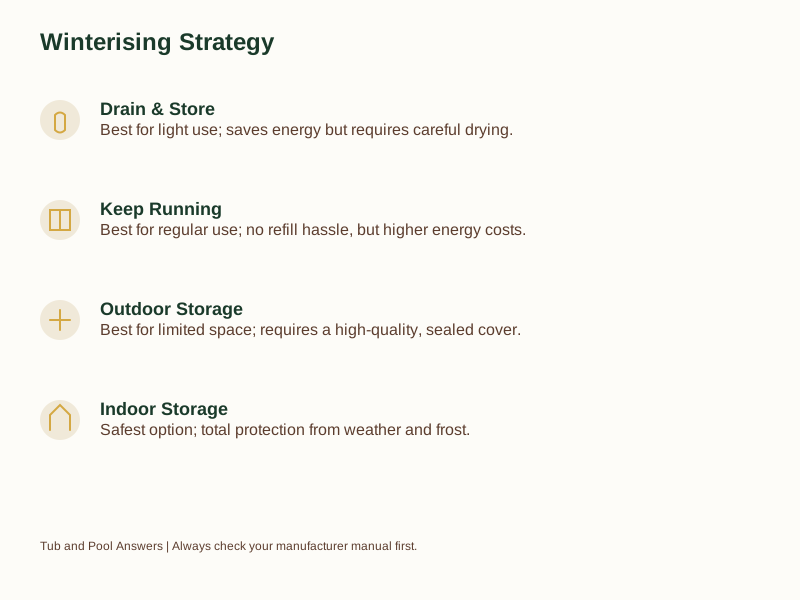
Winter Strategy Comparison
| Approach | Best Suited To | Key Factors |
|---|---|---|
| Drain and Store | Light/occasional use | Saves energy, requires drying time, freeze protection |
| Keep Running | Heavy/regular use | Convenient access, higher energy costs, cover maintenance critical |
| Outdoor Storage | No indoor space available | Higher moisture risk, demands perfectly sealed cover |
| Indoor Storage | Space available | Safest option, protects from weather and freezing |
Your Next Steps After Winter
The draining and drying process protects your investment through UK winters. The sequence—drain, flush, remove trapped water, wipe down, dry thoroughly—isn’t complicated but cannot be rushed. Skipping proper drying risks mouldy liners or non-functional pumps.
If storing, execute the process correctly. If running through winter, acknowledge the energy costs and maintenance demands. Make an informed choice rather than defaulting to convenience.
Ensure optimal water chemistry before beginning. Get the Free Hot Tub Water Checklist for a clean start—whether draining for storage or maintaining through winter.
Continuing Your Hot Tub Care
Whichever path you took last winter, your next steps differ. If you stored your tub, our guide to the startup chemicals you actually need on a first fill covers the safe restart. If you kept it running through the cold months, our look at whether it’s worth running an inflatable hot tub through a UK winter helps assess whether to continue or switch approach next year.
Sources & Further Reading
As an Amazon Associate we earn from qualifying purchases. The products linked above are ones we recommend based on independent research and owner feedback.
Note: General guidance only, verify details with a qualified professional or official source.