Hot Tub pH Keeps Dropping: What’s Pulling It Down

As an Amazon Associate we earn from qualifying purchases. Some links on this page are affiliate links, which means we may earn a small commission if you make a purchase.
pH that drops repeatedly after correction is almost never a pH problem. It is a total alkalinity problem. Adding pH increaser without fixing alkalinity first is the action that causes the cycle to repeat.
The water isn’t stubborn. It has no buffer. Total alkalinity acts as a sponge that absorbs acidic inputs before they reach your pH reading. Without enough of that buffer—typically 80 to 120 parts per million—everyday acids from bather waste, sanitiser by-products, and rainwater push pH straight down again. pH increaser raises the number temporarily. It does nothing to restore the underlying chemistry. The buffer has to come first.
This guide explains why the buffer fails, what the spiral costs you, and the exact order to fix it.
The chemistry behind the drop
Hot tub water targets a pH range of 7.2 to 7.6 for most manufacturers and treatment guides. But pH doesn’t float around in isolation—it’s part of a system where total alkalinity serves as the primary stabiliser.
With alkalinity in the 80–120 ppm range, water can absorb small acid doses without significant pH movement. When alkalinity runs low, that capacity vanishes. Nothing remains to soak up the acid, so pH plummets rapidly.
Each bather introduces organic matter into the water. Chlorine or bromine attacks bacteria and oils, creating mildly acidic by-products. Rainwater enters when the lid’s off. Your sanitiser itself affects pH. These normal inputs cause no drama in a properly buffered tub.
The trap springs when alkalinity drifts low. Owners testing only pH—a common oversight—keep adding pH increaser and wonder why it doesn’t hold. That overnight pH drop represents water returning to its natural acidic state. pH increaser provides a temporary lift but doesn’t alter the underlying chemistry. The buffer must be replenished first.
Consequences of persistent imbalance
Low pH creates discomfort long before causing structural damage. Skin and eyes sting more in acidic water. It can feel harsh even with correct chlorine levels. If your water feels “off” compared to other spas, low pH is often the culprit.
The greater concern involves the tub’s long-term health. Acidic water attacks metal components—heater elements, jet internals, exposed fittings. Seals and gaskets deteriorate prematurely. This isn’t sudden failure but slow, invisible corrosion that shortens component life. Replacement parts for inflatable spas carry significant cost, and low pH damage often remains hidden until something fails.
A compounding effect worsens the situation. Low pH reduces chlorine’s effectiveness. The sanitiser you add to maintain safety works harder to achieve the same result. You add more chlorine, which creates more acidic by-products, driving pH lower still. It’s a downward spiral that wastes chemicals.
Sharp-smelling water that feels harsher than normal signals trouble. Eye or skin irritation that clears after a few days away from the tub provides another clue. These aren’t normal hot tub characteristics—they’re the water telling you something’s wrong.
Occasional low pH over a week or two isn’t catastrophic. Months of it tell a different story. If you’ve been chasing pH increaser every few days with no lasting results, you’re managing symptoms rather than solving the problem.
Correcting the imbalance
Most advice pages skip this crucial step—the only approach that actually solves the problem.
Sequence matters profoundly. Don’t raise pH first. Raise alkalinity, wait for stabilisation, then adjust pH if necessary. Frequently, once alkalinity reaches 80–120 ppm, pH settles into the proper zone independently and stays put.
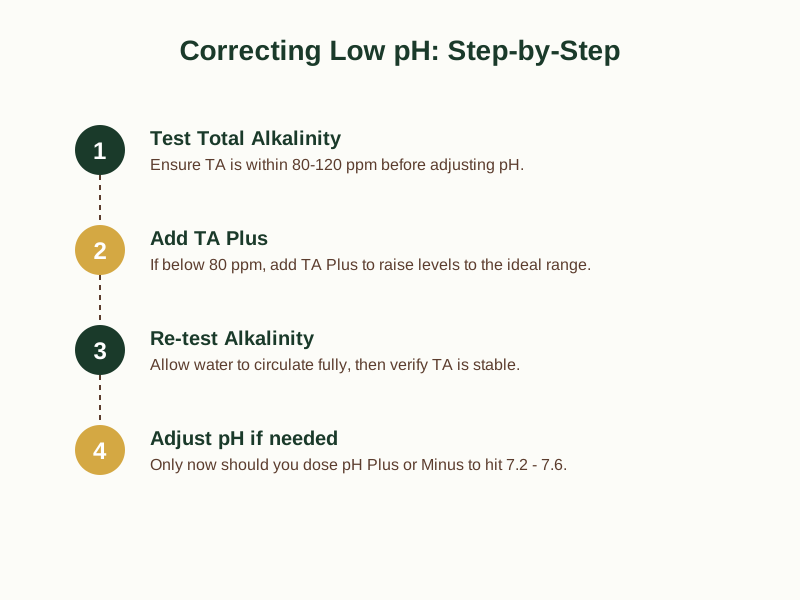
Start by testing total alkalinity. Most test strip packs include an alkalinity reading—usually the third or fourth pad. Below 80 ppm indicates the core problem. If alkalinity tests in range but pH continues dropping, investigate other causes—though alkalinity covers most situations.
Add TA Plus to raise alkalinity. Dose according to product label instructions for your tub volume—know your tub’s water capacity and measure precisely. Guessing the dose risks overshooting and creating the opposite problem.
Re-test alkalinity after the waiting period specified on the product label. Retest before proceeding further.
Only then check pH. If pH remains below 7.2, add pH increaser per label directions. With proper alkalinity buffer established, pH increaser will actually work—because something exists to hold the adjustment.
The common error involves skipping to step four without completing steps one through three. Test pH, see 6.8, add pH increaser, ignore alkalinity. The number rises temporarily, then drops again. The fix feels fleeting because it is—the buffer remains empty.
This approach addresses the structure. Raising alkalinity represents a one-time correction—once in range, normal maintenance sustains it. The water gains capacity to absorb everyday acid inputs without pH instability.
Don’t guess the dose. Get the Free Hot Tub Water Checklist to see precisely how much TA Plus and pH Plus your tub size requires.
When to start fresh
Sometimes water deteriorates beyond chemical correction’s reach. If total dissolved solids accumulate from repeated topping up rather than draining, or water appears visibly cloudy, foamy, or develops persistent odours unaffected by shock treatment, a full drain and refill becomes necessary.
This isn’t failure—it’s maintenance. Every hot tub gradually accumulates dissolved solids from chemicals, body products, and general use. High TDS levels affect chemical behaviour—buffering turns unpredictable, pH bounces regardless of additives. Draining removes all accumulated solids.
Before draining, run a plumbing flush through the system—Aquasparkle Hot Tub Flush (paid link) or equivalent—with the pump operating as directed. This clears biofilm or residue from pipework that a simple drain misses. Then drain, refill, and begin anew with the alkalinity-first approach. Fresh water, properly balanced from the start, maintains far more easily than degraded water fought over months.
View Aquasparkle Hot Tub Flush on Amazon → (paid link)
Heavy use with multiple bathers several times weekly necessitates more frequent changes, while light summer-only use permits longer intervals between drains.
Common questions answered
How frequently should I test water?
Test at least weekly, and after any heavy-use session or significant chemical addition. When pH drifts, test more often until stabilisation occurs—once alkalinity reaches range and pH holds steady, weekly checks suffice for most situations.
Should I use pH Minus for low pH?
Only if pH exceeds 7.6. If pH drops due to low alkalinity, pH Minus worsens the situation—it reduces both pH and alkalinity, deepening the buffer problem. Check alkalinity first. If alkalinity tests in range and pH remains high, then pH Minus applies.
What’s the ideal pH range?
Aim for 7.2 to 7.6. Below 7.2 makes water irritating and corrosive. Above 7.6 reduces chlorine or bromine effectiveness and promotes scale formation on heater elements.
The ideal targets for your water chemistry are: total alkalinity between 80 and 120 ppm, pH level between 7.2 and 7.6, and sanitiser levels as per your product’s guidance. Water clarity should be clear, and if total dissolved solids (TDS) are high according to your manufacturer’s guidance, a drain and refill is required.
Connecting the symptoms
The core issue becomes clear once recognised. Water won’t hold pH because it lacks the means to hold it. Fill the buffer, and everything else falls into place—fewer chemicals, less adjustment, water maintaining balance between service sessions instead of demanding daily attention.
If you’ve added pH increaser every couple of days wondering why it never sticks, check your alkalinity. That’s the missing step, and correcting it proves far simpler than it initially appeared.
This problem has a mirror: pH that refuses to drop represents the same alkalinity trap operating in reverse. Both symptoms indicate the same underlying issue—total alkalinity outside the proper range. If you battle high pH resisting correction, our guide on hot tub water balance and the alkalinity-pH relationship explains the identical mechanism running the opposite direction.
For a printable step-by-step plan before your next service session, grab the Free Hot Tub Water Checklist —it guides testing, dosing, and correct sequence with space for recording readings.
As an Amazon Associate we earn from qualifying purchases. The products linked above are ones we recommend based on independent research and owner feedback.
Note: General guidance only, verify details with a qualified professional or official source.