Hot Tub Startup Chemicals: What You Actually Need for a First Fill
As an Amazon Associate we earn from qualifying purchases. This page contains affiliate links — if you buy through them, we earn a small commission at no extra cost to you.
New hot tub owners often rush to buy sanitiser and shock treatments for their first fill, but that timing puts the cart before the horse. The chemicals you need immediately are balancing agents, not sanitising ones. Getting this sequence wrong means your sanitiser won’t work properly and your water chemistry will be unstable from day one.
Your tap water arrives with its own chemical profile. Regional variations across the UK mean water hardness and alkalinity differ significantly — from soft Scottish supplies to the hard water common in South East England. This baseline determines how your pH will respond to chemical additions.
The critical error is adding sanitiser before stabilising the water balance. Chlorine and bromine require a pH range of 7.2 to 7.6 to work effectively [HSE guidance]. That target pH is only achievable once total alkalinity — the buffer that prevents pH swings — is properly set. If alkalinity is unstable, pH will drift constantly, leaving your sanitiser operating at reduced efficiency.
Don’t reach for the sanitiser first. The correct sequence begins with testing and adjusting alkalinity, then pH, and only then introducing sanitiser. This method ensures your chemicals work as intended rather than fighting against unbalanced water.
Alkalinity acts as the foundation for stable water chemistry. It prevents pH from fluctuating wildly when you add other substances. If alkalinity measures too low, pH becomes unstable; if too high, pH resists adjustment. While UK tap water alkalinity varies considerably, the target for hot tubs is 80–120 ppm [spa water quality references]. You might need to raise low alkalinity, or find your water needs no adjustment — testing reveals which.
The proper first-fill procedure:
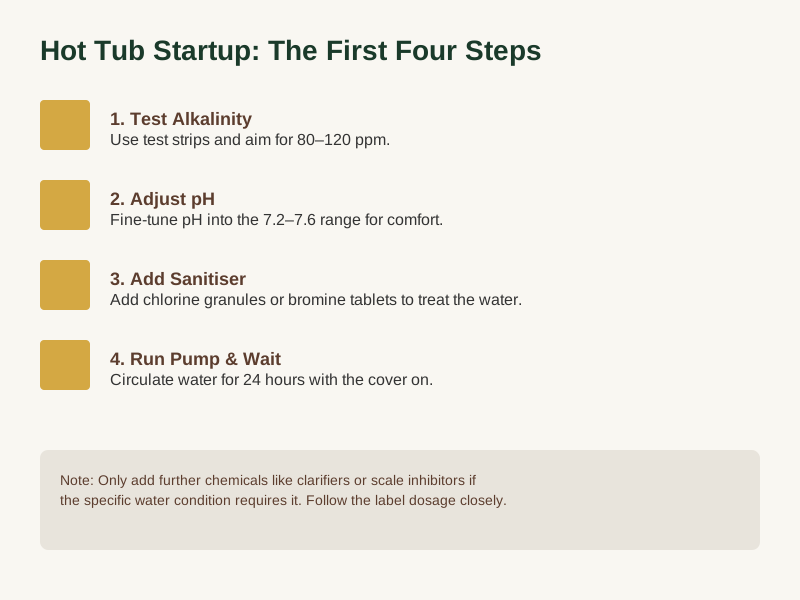
- Test total alkalinity. Use test strips aiming for 80–120 ppm. Adjust with alkalinity increaser if needed.
- Test and adjust pH. With stable alkalinity, pH becomes predictable. Target 7.2–7.6 using pH adjusters in small doses.
- Add sanitiser. Only now, with balanced water, introduce chlorine granules or bromine tablets.
- Circulate and wait. Run the pump for at least 24 hours with the cover on to distribute chemicals and allow concentration to reach safe bathing levels.
Proper circulation during this process ensures even chemical distribution. Without it, dosing becomes uneven and test readings unreliable.
Now you understand the sequence — get the free Hot Tub Water Checklist to keep these steps handy when you’re at the tub with test strips in hand.
The method: Test alkalinity → Balance to 80–120 ppm → Adjust pH to 7.2–7.6 → Add sanitiser and wait 24 hours. Other chemicals can wait until actually needed.
What you actually need to purchase is simpler than comprehensive starter kits suggest. Many kits include products for issues you may never encounter — clarifiers, algaecides, scale inhibitors. If your water starts clear and you balance it correctly, these extras likely won’t be needed for months.
Essential first-fill chemicals fall into two categories:
Balancing chemicals:
- Alkalinity increaser: Raises low alkalinity to the 80–120 ppm target. This is your first priority.
- pH Plus and pH Minus: Fine-tune pH into the correct range. UK water varies, so you may need either.
- Test strips: Essential for accurate measurement. Clearwater Test Strips (paid link) provide reliable readings, though colour matching requires care across all brands. AquaChek Test Strips (paid link) cover much the same ground, with one swap worth knowing before you order: the yellow-label pack reads chlorine, pH, total alkalinity and cyanuric acid, so there is no bromine pad on it. Fine if you run chlorine, wrong pack if you run bromine.
Check Clearwater Test Strips price → (paid link)
Sanitiser options:
- Chlorine granules (like Clearwater Chlorine Granules (paid link)): The standard choice for initial fills. Fast-acting and cost-effective. Requires precise dosing measured with test strips.
View Clearwater Chlorine Granules on Amazon → (paid link)
- Bromine tablets (like Safe Splash Bromine Tablets (paid link)): An alternative often chosen for sensitive skin. May have less noticeable odour than chlorine. Typically better suited to ongoing maintenance than initial shock dosing.
Buy Safe Splash Bromine Tablets on Amazon → (paid link)
That covers the essential first-fill shopping list. Additional products in starter kits can be purchased later if specific water issues actually develop.
Pre-Chemical Hardware Checks
Before adding any chemicals, complete these mechanical checks:
Keep power off until the tub is full. Running the pump dry can damage the motor [manufacturer guidance]. This basic precaution is often overlooked in the excitement of first setup.
Inspect the filter before filling. Remove any protective packaging and ensure it’s properly seated. The pump needs an unobstructed filter to circulate water effectively.
Check fittings and valves. Inspect jets and drain valves for any manufacturing residues. Ensure the drain valve seals properly when closed.
Circulate during chemical addition. Add chemicals to moving water rather than static pools to ensure even distribution and consistent test results.
Once the tub is full, filter installed, and pump running — begin with alkalinity testing.
For ongoing maintenance guidance, grab the free Hot Tub Water Checklist covering both first fill and routine care.
First Fill Questions Answered
Should I shock the water immediately after filling?
No. Shock dosing before balancing is counterproductive. Test and adjust alkalinity first, then pH, then add sanitiser. With fresh mains water and a new tub, bacterial load is minimal — you have time to follow the correct sequence.
How long before using the tub after adding chemicals?
Wait at least 24 hours after the sanitiser dose with continuous pump operation. Test water before use — pH and sanitiser levels must be in range. Rushing this step risks skin irritation.
Can I use tap water directly for my hot tub?
Yes, but your local water’s alkalinity and hardness affect balancing difficulty. Hard water areas start with higher alkalinity, requiring different adjustments than soft water supplies. Test first, then adjust accordingly.
Chlorine or bromine for first fill?
Chlorine works faster for initial sanitisation. Bromine may be preferable for households where chlorine causes irritation or odour is a concern. Both work effectively when water is properly balanced first.
The Essential Sequence
Balance alkalinity, then pH, then add sanitiser, then wait. Other chemicals can wait until needed.
This sequence is often overlooked in first-fill guidance. Starter kits encourage buying everything at once, and online advice can be scattered. But the alkalinity-pH-sanitiser order determines whether your first fill stabilises cleanly or becomes an ongoing chemistry battle.
Your tap water has inherent chemical properties. Most guides treat it as neutral, but it isn’t. Stabilise the foundation first, and subsequent additions work properly. Skip this, and you’re wasting money on chemicals that can’t perform effectively.
Once you’ve mastered the startup sequence, your routine maintenance begins. For guidance on the ongoing chemical kit you’ll need after the first fill stabilises, see The Minimum Chemical Kit for an Inflatable Hot Tub .
Hot Tub Startup Chemicals: First Fill Essentials
| Product | Purpose | When to Use |
|---|---|---|
| Alkalinity Increaser | Raises Total Alkalinity | First step if water tests low (80-120 ppm target) |
| pH Plus / pH Minus | Adjusts pH to 7.2-7.6 | Second step after alkalinity stable |
| Chlorine Granules (paid link) | Fast-acting sanitiser | Third step, once pH balanced |
| Bromine Tablets (paid link) | Gentler sanitiser | Alternative for sensitive skin households |
| Test Strips (paid link) | Monitor water chemistry | Essential before every chemical addition |
| Clarifier (paid link) | Clears cloudy water | Only if cloudiness develops after startup |
| Algaecide | Prevents algae growth | Only if water shows green tint |
| Scale Inhibitor | Prevents limescale | Only in very hard water areas with scaling |
Reference Information
- Water UK - Regional water hardness information
- HSE - Safe use of chemicals in leisure facilities
- [Spa water balance guidelines - industry standards]
As an Amazon Associate we earn from qualifying purchases. The products linked above are ones we recommend based on independent research and owner feedback.
Note: General guidance only, verify details with a qualified professional or official source.