Inflatable Hot Tub Filters and Small Faults: What to Check Before You Blame the Water
As an Amazon Associate we earn from qualifying purchases. This page contains affiliate links — if you buy through them, we earn a small commission at no extra cost to you.
- Filter blockage: Water can’t pass through clogged pleats, restricting flow to the heater and pump.
- Flow sensor trip: Reduced flow triggers safety shutdowns, often mistaken for heater failure.
- Valve misalignment: Improper seating allows unfiltered water to bypass the cartridge entirely.
These three mechanical issues account for most performance problems wrongly attributed to water chemistry. Lay-Z-Spa’s own troubleshooting guide points at the filter first, not the chemicals. That’s worth knowing before you spend another tenner on clarifier you don’t need.
Spotting a Worn Filter
The filter is the first line of defence in any inflatable hot tub. It traps oils, lotions and fine particles that would otherwise circulate through the heater and cloud the water. When clogged or worn, the whole system works harder and water quality suffers.
Common signs a cartridge needs replacing include pleats matted together that won’t separate when flexed, plastic framework that’s become rigid or warped from repeated soaking, or persistent discolouration that doesn’t lift after rinsing. If you notice any two of these together, the cartridge is fighting you rather than helping.
The inspection takes just minutes. Work through this sequence:
Filter Health Assessment
- Remove cartridge and hold to light — can you see light through the pleats?
- Pleats separate easily when gently flexed
- No visible debris caught between pleats
- Framework is straight and undamaged
- Water runs through cleanly when rinsed (not murky)
- No chemical smell remains after rinsing
If the cartridge fails most checks, cleaning won’t revive it. Replace it. If it passes, rinse under cold mains water — never hot or with high-pressure jets, which can damage the filter media. A filter cleaner spray helps with deeper grime, particularly oils that cold water alone won’t shift. Periodic deep cleaning alongside routine rinsing extends cartridge life.
A spare cartridge on standby ensures the tub never runs unfiltered while waiting for parts. That’s what prevents having to explain to guests why the water resembles pea soup.
When Heaters Cut Out Unexpectedly
A clogged filter doesn’t just cloud water — it restricts flow through the entire system. The heater has a flow sensor that shuts down the unit when flow drops below a safety threshold. That’s the flow-related error code in your manual, or the heater cutting out shortly after starting despite correct settings.
The mechanism is straightforward: inadequate flow means poor heat transfer, risking heater element overheating in stagnant water. The safety cutoff exists for good reason, though the trigger is often a blocked filter.
Pump rattling can indicate strain against restriction. Ignore it and you risk pump seal failure or burned-out heater elements, potentially requiring professional service and lengthy waits for replacement parts.
Immediate Response to Heater Shutdown
If your heater cuts out, stop running the tub. Remove and inspect the filter. If clogged, rinse debris throughout, or showing visual deterioration, swap it for a clean spare. Let the system run lid-off for a few minutes to flush, then restart. If the error clears, you’ve identified the problem. If it persists, the flow sensor or pump may need professional attention.
Protecting pump and heater from debris isn’t just maintenance — it’s what keeps the system running through a season without call-outs. Canadian Spa guidance on their filter cartridges states explicitly: high-quality cartridges filter out dirt and grime, optimising pump performance by protecting components from debris.
Choosing the Right Cartridge
No single cartridge suits every tub. This is genuinely fit-by-scenario territory.
Generic DL79-DL82 packs are attractively priced and will filter water if they fit your housing. But model compatibility isn’t always clear, and ill-fitting cartridges let unfiltered water bypass the system. Use them only if certain of fit for your specific tub.
Three common scenarios cover most UK inflatable owners:
Lay-Z-Spa Owners
Lay-Z-Spa Type VI and equivalent cartridges are the safest choice. Specifically engineered for Lay-Z-Spa filtration housings, fit is guaranteed. The trade-off is price — you’re paying a premium for guaranteed fit and peace of mind that the pump isn’t ingesting unfiltered water through poor seals. For regular use, it’s justified.
Canadian Spa Owners
The 4 × 15 ft² Antimicrobial cartridges fit V1 and V2 Canadian Spas from 2013 onwards. These are reusable and cleanable, with larger surface area reducing clogging under heavy use.
Budget or Light Use
For fortnightly use with religious rinsing, generic DL-series packs (DL79, DL80, DL82) are reasonable — but only after confirming fit against your existing cartridge’s dimensions. Some UK owners have bought generics that physically didn’t fit despite listing implications.
Premium third-party cartridges exist, but listings without explicit compatibility confirmation are a gamble; the official cartridge for your model remains the safer buy.
Spare filters and cleaner represent small running costs against pump or heater replacement expenses.
Now you know what fits your situation — get the Free Hot Tub Water Checklist to maintain the routine before filter issues arise.
Maintenance Frequency Guidelines
The honest schedule depends on usage intensity. Take intervals from your tub’s manual and filter cleaner label: rinse routinely, deep clean periodically, replace at stated intervals or sooner if showing visible wear.
Maintenance Calendar
- Weekly: Remove cartridge, rinse under cold mains water, check for debris in pleats
- Every 4–6 weeks: Deep clean with dedicated filter cleaner spray, rinse thoroughly, dry fully before refitting
- Every 4–6 weeks (or sooner): Replace if pleats are matted, framework warped, or water clarity doesn’t improve after cleaning
- Always: Keep spare cartridge available to avoid running tub unfiltered
Heavy use — daily soaks, multiple users, high temperatures — accelerates cartridge wear significantly. Under daily use, a cartridge like the Lay-Z-Spa Filter Cartridge Type VI (paid link), sold in packs of two, may need replacing sooner than the manual’s interval. That’s not a defect but the cartridge doing its job under heavy load.
Buy Lay-Z-Spa Filter Cartridge Type VI on Amazon → (paid link)
Watch water returning to jets. If cloudier exiting than entering, the cartridge isn’t trapping particles effectively. Swap it at this point rather than waiting until water is visibly murky.
It is important to avoid using pool filters in hot tubs, as they’re designed for different flow rates and chemical environments. Hot tubs operate with lower flow dynamics and higher temperatures, meaning pool cartridges may restrict flow excessively or filter ineffectively in warm water. Always use cartridges rated specifically for hot tubs.
A common cause of filter housing leaks is worn or displaced O-rings where the cartridge seats into the housing. Remove the cartridge, inspect the O-ring for cracks or debris, clean it and the seating groove, and refit. If damaged, replacement housing sets are available. Don’t run the tub with leaking housing — unfiltered water damages the pump.
While clogged filters do not directly affect pH, they can indirectly cause pH drift. A filter unable to remove organic matter allows that organic load to alter water balance over time as bacteria and waste products accumulate. A clean filter doesn’t fix pH, but a clogged one makes stability harder to maintain.
Replacement Scenario Overview
| Scenario | Best For | Recommended Cartridge | Notes |
|---|---|---|---|
| Lay-Z-Spa Owners | Regular use, guaranteed fit | Type VI (paid link) or equivalent | Premium price for peace of mind and better filtration |
| Canadian Spa Owners | V1 and V2 models (2013+) | 4 x 15 ft² Antimicrobial | Larger surface area reduces clogging |
| Budget / Light Use | Fortnightly use, strict rinsing | Generic DL-series (DL79, DL80, DL82) | Only if dimensions confirmed to fit housing |
| Heavy Use (Daily) | Daily soaks, multiple users | Official Type VI or Antimicrobial | May need replacing more frequently |
| Light Use (Weekly) | Occasional soaks | Generic DL-series | Can last longer if water clarity remains good |
Next Steps After Diagnosis
The filter is the starting point when water clouds, pumps strain, or heaters cut out without obvious reason. Most often, one of these three issues is the culprit — none fixed by adding more chemicals to water that can’t flow properly through the cartridge.
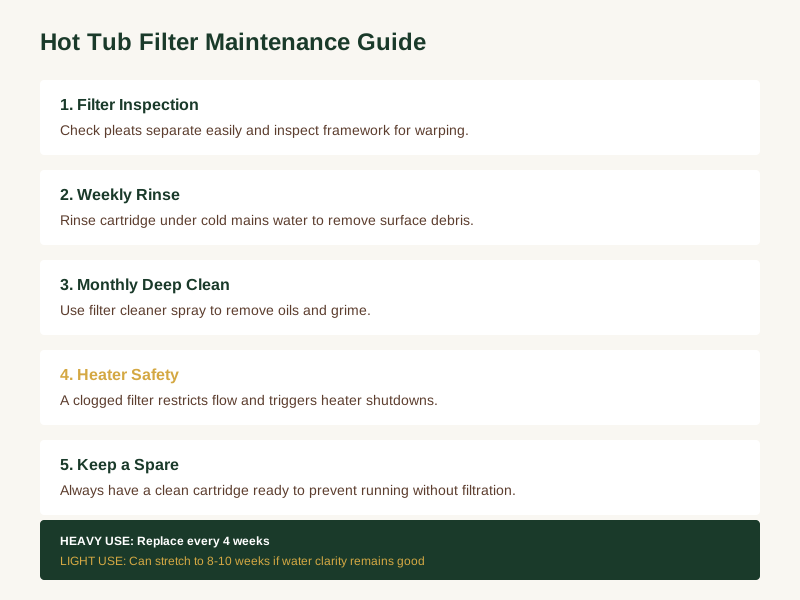
Keep a spare cartridge available. Rinse the active one weekly. Deep clean monthly. Replace when worn rather than hoping rinsing will restore it. This routine maintains clear inflatable hot tub water without constant chemical intervention.
If you want a simple way to track testing, cleaning and replacement schedules, grab our free resource — a one-page checklist to keep near the tub.
Get the Free Hot Tub Water Checklist — everything to check, in sequence, before spending money elsewhere.
Did the filter check resolve your issue? If you’re back to clear water, your next read is the filter replacement schedule to keep it that way. If the tub still isn’t heating properly after filter replacement, the not-heating diagnostic guide walks through the next steps.
Explore More Topics
Quick answers:
Go deeper on specific topics:
- How Often to Change an Inflatable Hot Tub Filter (and Why Cleaning Isn’t Always Enough)
- Inflatable Hot Tub Not Heating: The Checks to Do Before You Call the Maker
- Inflatable Hot Tub Losing Air: Puncture, Valve or Temperature?
- What to Put Under an Inflatable Hot Tub on Grass or a Patio
Sources & Further Reading
- Lay-Z-Spa (Bestway) owner help
- Canadian Spa Company Filter Cartridges
- Pool Water Treatment Advisory Group (PWTAG)
As an Amazon Associate we earn from qualifying purchases. The products linked above are ones we recommend based on independent research and owner feedback.
Note: General guidance only. Verify details with a qualified professional or official source.