pH Too High in a Hot Tub and It Won’t Come Down: The Alkalinity Trap
As an Amazon Associate we earn from qualifying purchases. This page contains affiliate links — if you buy through them, we earn a small commission at no extra cost to you.
When your hot tub’s pH stays stubbornly high despite adding pH Down, the chemistry at work is straightforward: high alkalinity absorbs acid before the pH reading can change. Continuing to dose without addressing alkalinity means spending money on chemicals that get neutralised before they can do their job.
This buffer mechanism explains why pH appears stuck. Total alkalinity acts like a chemical sponge, soaking up the acid you add. Only when you reduce that alkalinity first will your pH adjustments actually take hold.
Understanding the Buffer: Why pH and Alkalinity Are Linked
pH measures acidity or alkalinity on a 0-14 scale, with 7.2 to 7.8 being the target range for hot tubs where sanitisers work effectively and water feels comfortable.
Total alkalinity represents the water’s resistance to pH change. Think of it as the water’s stability system—high alkalinity means strong resistance. When you add pH Down, it must overcome this buffer before affecting the pH reading.
At high pH levels, water appears dull, scale forms more readily, and sanitisers become less effective. Chlorine particularly loses its bacteria-killing power when pH rises too high. These issues aren’t solved by adding more chlorine—they require correcting the underlying pH imbalance.
In areas with hard water, which contains more dissolved minerals, alkalinity tends to be naturally higher from the initial fill. This creates the perfect conditions for the alkalinity trap: pH sits high after refilling, repeated dosing has little effect, and the water quality suffers until someone tests the alkalinity.
Breaking the Cycle: Lower Alkalinity First
The solution lies in recognising that high total alkalinity holds pH hostage. Instead of fighting the pH reading directly, you need to reduce the buffering capacity.
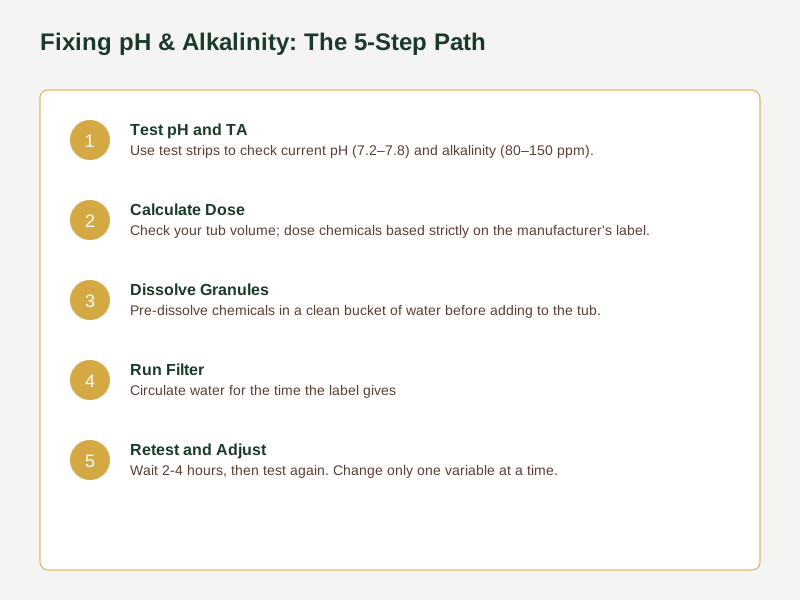
Using pH Down to lower alkalinity follows the same process as adjusting pH—dissolve granules in a bucket of warm water first, add with the filter running, then retest. The key difference is monitoring alkalinity reduction as your primary success metric rather than pH movement.
Lay-Z-Spa’s guidance for their Clearwater pH Decreaser confirms this approach: the product lowers both pH and alkalinity when used correctly. This isn’t a workaround—it’s the intended functionality.
If you keep adding pH Down while alkalinity remains high, you risk pH bounce—where the buffer suddenly weakens and pH drops precipitously. This swing from one extreme to another creates more problems than it solves.
Correcting High pH and Alkalinity: A Practical Sequence
Follow these steps in order to break the alkalinity trap effectively.
Test both parameters simultaneously using 5-way test strips. Don’t just check pH—you need the alkalinity reading to diagnose the problem. If alkalinity sits above the product’s recommended range (typically 80-150 ppm), you’ve identified the buffer issue.
Calculate your dose based on your tub’s water volume. Check your specific model’s capacity rather than guessing—accurate dosing prevents under- or over-treatment.
Always dissolve granules in a bucket of warm water before adding to the tub. This prevents concentrated chemicals from damaging the tub surface and ensures even distribution. Manufacturer guidance emphasises this step to avoid inconsistent results.
Run the filtration system for the duration specified on the product label. Proper circulation is essential for mixing the treatment throughout the water volume.
Retest alkalinity and pH after treatment. Often, pH will follow alkalinity downward once the buffer weakens. If pH remains high after alkalinity returns to the target range, a smaller follow-up dose may be necessary.
The critical mistake is adding more pH Down while alkalinity remains elevated. Break this pattern by focusing on alkalinity reduction first.
Now you understand the mechanism—Get the Free Hot Tub Water Checklist to maintain proper water balance before problems develop.
Choosing the Right Chemical for the Job
pH Down (also labelled pH Minus or TA Reducer) lowers both pH and alkalinity. It’s appropriate when readings sit above 7.8. Clearwater pH Minus (paid link) is widely available and effective when used according to instructions. The key is measured dosing and retesting—adding too much can swing pH too low.
Check Clearwater pH Minus price → (paid link)
pH Up (sometimes called pH Plus) raises both parameters and is used when pH drops below 7.2. While less common in hard-water regions, it’s necessary after heavy sanitiser use or rainwater dilution. Clearwater pH Plus (paid link) requires the same careful dosing approach as pH Down.
Buy Clearwater pH Plus on Amazon → (paid link)
The principle remains consistent: test before dosing, address alkalinity when pH resists adjustment, and retest between treatments.
Avoiding Common Pitfalls
Skipping the dissolution step risks damaging your tub and creates uneven chemical distribution. Always use a bucket of warm water to dissolve granules first.
Insufficient filtration time leads to inaccurate test readings. Allow full circulation as specified on the product label.
Overdosing emerges from frustration when pH doesn’t respond. This often causes pH bounce—where the buffer collapses and pH drops rapidly. Now you’re correcting in the opposite direction.
Focusing exclusively on pH while ignoring alkalinity is the fundamental error. Alkalinity represents the mechanism controlling pH stability. If pH adjustments aren’t working, test alkalinity—that’s where the solution lies.
Frequently Asked Questions
How frequently should I test my water?
Test at least weekly when the tub isn’t in use, and more often after heavy use or chemical additions. In hard-water areas, alkalinity may drift more quickly, warranting twice-weekly checks.
Is vinegar a suitable alternative to pH Down?
Vinegar isn’t recommended for hot tubs. While it can lower pH, it may affect alkalinity unpredictably and potentially damage components over time. Purpose-formulated pH Down products are designed for hot tub chemistry and provide reliable, measurable results.
What’s the ideal pH range?
Aim for 7.2 to 7.8, with 7.4 to 7.6 being optimal for both comfort and sanitiser effectiveness. Outside this range, you risk scale formation and cloudy water (too high) or corrosion and irritation (too low).
Water Chemistry Reference
The target pH range is 7.2–7.8, corrected using pH Down if high or pH Up if low. Total alkalinity should be maintained between 80–150 ppm, and is reduced using pH Down if elevated. For sanitiser, keep chlorine in the range on your product label and test strip, and shock if it runs low. Water clarity should be clear; filter and shock if it becomes cloudy.
Implementing the Solution
When pH resists adjustment, test alkalinity before adding more chemicals. High alkalinity typically causes the resistance, and reducing it with pH Down—properly dissolved and circulated—allows pH to stabilise naturally.
This approach prevents wasteful chemical use and avoids the pH bounce that occurs when the buffer collapses unexpectedly. The sequence is logical: test both parameters, reduce alkalinity if high, then reassess pH.
After each small pH adjustment, retest alkalinity to ensure it remains within the target range. Once alkalinity is correct, pH typically stabilises. For complete water-balance guidance, including the proper correction order for multiple parameters, see our water-balance guide .
Getting this sequence right saves time, money, and frustration while maintaining better water quality.
Related Guides
For comprehensive water management, our Hot Tub Water Balance: pH, Alkalinity and UK Hard Water in the Right Order covers the full correction sequence.
Sources & Further Reading
As an Amazon Associate we earn from qualifying purchases. The products linked above are ones we recommend based on independent research and owner feedback.
Note: General guidance only. Always verify details with a qualified professional or official source.