Can You Use Bicarbonate of Soda Instead of Alkalinity Increaser in a Hot Tub?
As an Amazon Associate we earn from qualifying purchases. This page contains affiliate links — if you buy through them, we earn a small commission at no extra cost to you.
Sodium bicarbonate is the active ingredient that makes both branded alkalinity increaser and household bicarbonate of soda work. The practical differences come down to concentration, purity grade, and price per gram of active ingredient. Understanding these distinctions lets you make an informed choice about which product to use.
What Total Alkalinity Actually Does
Total alkalinity is your water’s buffer against pH swings. It absorbs the chemical shocks that would otherwise send your pH reading bouncing from one extreme to another. When alkalinity drops too low, you’ll notice chlorine seems to vanish quickly, your eyes sting after a soak, and pH readings never stabilise no matter how carefully you adjust them.
The target range for stable hot tub water sits between 80 and 120 parts per million (ppm). Below 80 ppm, the water loses its ability to resist pH changes, making everything harder to control. Your sanitiser needs a stable pH environment to work effectively—when pH drifts, chlorine and bromine become less potent, forcing you to use more chemicals for less result.
The Kitchen Cupboard Swap That Works
Bicarbonate of soda—pure sodium bicarbonate—is chemically identical to the active component in commercial alkalinity increasers. It raises total alkalinity by providing carbonate ions that neutralise acids, effectively increasing the water’s buffering capacity.
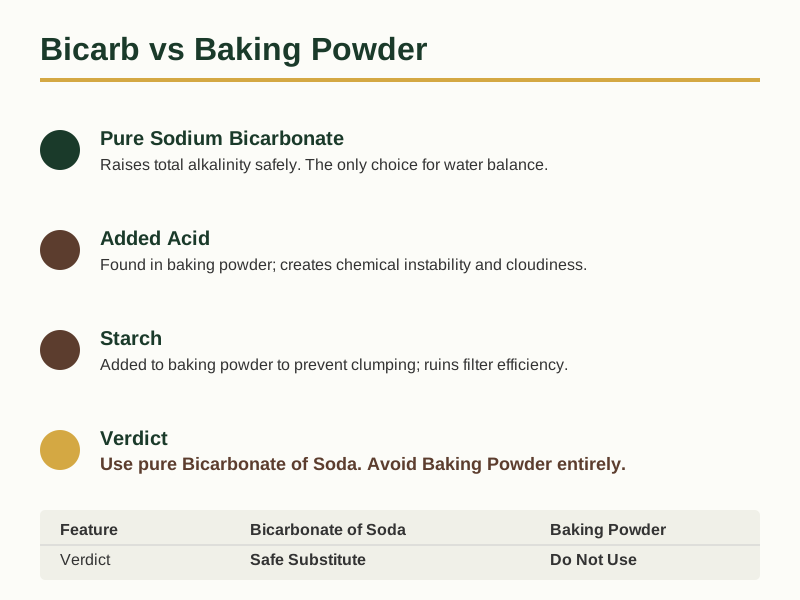
Baking powder, however, is a different product entirely. While it contains sodium bicarbonate, it also includes an acid (typically cream of tartar) and starch. These additives can cloud your water, irritate skin, and disrupt your chemical balance. Using baking powder is a false economy that often leads to needing a full drain and refill.
The safe approach: Use food-grade sodium bicarbonate as a direct substitute, but follow the same strict dosing rules as you would with a branded product. Test your water first, calculate the dose accurately, and never increase alkalinity by more than 30 ppm in a single day.
Raising Alkalinity Step by Step
Getting this right requires patience and precision. Rushing the process often creates new problems while solving the original one.
Test thoroughly first — Use fresh test strips to measure your current alkalinity, pH, and calcium hardness. Old strips can give misleading readings that send you in the wrong direction.
Calculate your dose carefully — Most alkalinity increaser products provide a dosing table based on tub volume. As a general guide, approximately 17 grams of sodium bicarbonate per 1,000 litres will raise alkalinity by about 10 ppm. Always use your product’s specific guidance for greater accuracy.
Dissolve before adding — Mix the measured dose in a bucket of warm water until fully dissolved. Adding powder directly to the tub can result in uneven distribution and particles settling in the filter.
Distribute evenly — With the pump running, pour the dissolved solution slowly across the water’s surface to ensure it mixes thoroughly.
Wait and retest — Allow 4-6 hours for the treatment to circulate completely before testing again. If alkalinity remains below 80 ppm, you can repeat the process, but avoid increasing it by more than 30 ppm in a 24-hour period.
This methodical approach prevents the cloudiness and pH lock-out that often follows guesswork dosing.
Common Pitfalls and Regional Considerations
The temptation to estimate doses or use convenient substitutes often backfires. Low alkalinity is particularly common in areas with naturally soft tap water. If you’ve filled your tub with soft water or collected rainwater, expect to need alkalinity adjustment from the start.
The key is recognising that low alkalinity isn’t a complex problem—it’s one of the most straightforward issues to correct with proper testing and patient dosing. Neither requires expensive chemicals or professional help.
Bicarbonate of Soda vs Baking Powder
| Feature | Bicarbonate of Soda | Baking Powder |
|---|---|---|
| Active Ingredient | Sodium Bicarbonate | Sodium Bicarbonate + Acid |
| Effect on Water | Raises Total Alkalinity | Can cause cloudiness and irritation |
| Best For | Hot Tub Water Care | Baking |
| Verdict | Safe Substitute | Do Not Use |
Questions Owners Ask
Can I use bicarbonate of soda instead of alkalinity increaser?
Yes—pure sodium bicarbonate is chemically equivalent to the active ingredient in commercial alkalinity increasers. Food-grade bicarbonate from supermarkets works effectively when dosed correctly.
How much bicarb do I need for a 1,000-litre tub?
Approximately 17 grams will raise total alkalinity by around 10 ppm in 1,000 litres of water. Always consult your specific product’s dosing table for precise measurements based on your tub’s exact volume.
Will bicarb raise pH as well?
Sodium bicarbonate has minimal direct effect on pH at normal dosing levels. Its primary function is buffering—preventing pH from drifting. Once alkalinity stabilises within the 80-120 ppm range, pH becomes much easier to manage.
What should I use to lower pH instead of baking powder?
While baking powder contains acid, its additional ingredients make it unsuitable for hot tubs. For pH reduction, use a dedicated pH decreaser product formulated for hot tub water care.
View Clearwater pH Minus on Amazon → (paid link)
Correcting alkalinity is the foundational step in a specific water-balancing sequence. Once alkalinity is stable, pH becomes predictable, sanitiser works efficiently, and water feels comfortable rather than harsh. Bicarbonate of soda provides the same chemical action as branded products when used correctly.
Understanding where alkalinity adjustment fits in the broader context of water care helps prevent missteps. Our guide on total alkalinity versus pH explains the correct sequence—alkalinity first, then pH—and what steps should follow to maintain balanced water long-term.
Related Guides
- The Minimum Chemical Kit for an Inflatable Hot Tub
- Hot Tub Water Balance: pH, Alkalinity and UK Hard Water
Sources & Further Reading
As an Amazon Associate we earn from qualifying purchases. The products linked above are ones we recommend based on independent research and owner feedback.
Note: General guidance only. Always verify specific chemical dosages and safety guidelines with a qualified professional or the manufacturer of your hot tub equipment.