What to Put Under an Inflatable Hot Tub on Grass or a Patio
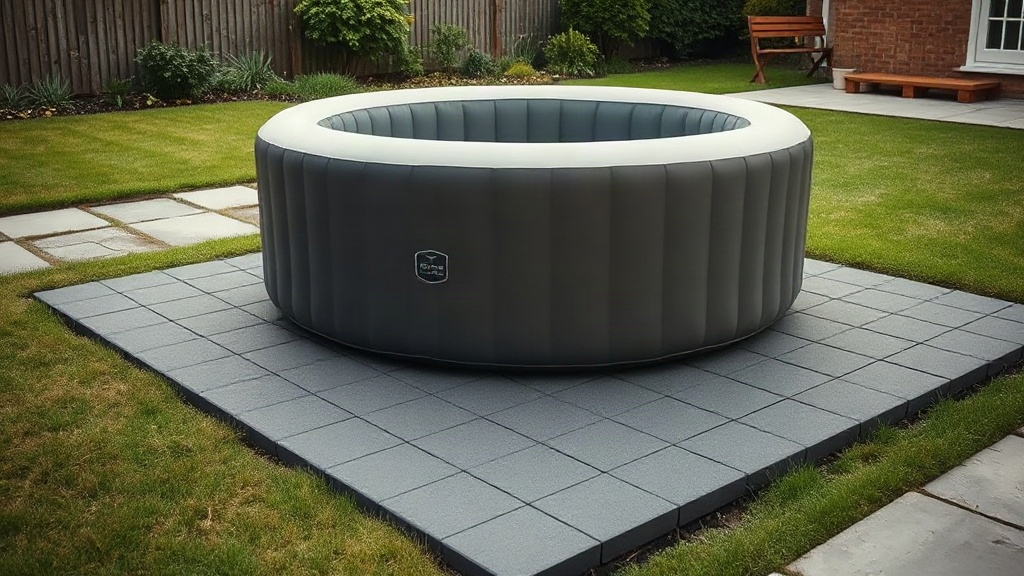
A filled inflatable hot tub, with water and occupants, can easily weigh over 1500 kilograms. This concentrated load on a small footprint is what determines whether your chosen surface is suitable. Placing it directly on grass or concrete risks damaging the thin PVC liner and significantly increases heat loss, making the choice of a proper base a fundamental setup decision.
What a Base Must Do
An inflatable hot tub base isn’t a luxury add-on. It’s doing four jobs that matter for the life of your tub.
The first is puncture protection. The PVC liner is vulnerable to sharp objects. Stones, roots, or even a buried twig can work their way through it under the weight of a full tub. Once you’ve got a leak, you’re draining everything, ordering a replacement liner, and potentially saying goodbye to the evening you’d planned.
The second is heat retention. Cold ground draws warmth out of the water below. On a damp British lawn in October, this isn’t a minor inefficiency — it’s a meaningful chunk of your running costs. Anything you put between the tub and the ground slows that heat loss down.
The third is stability. The base needs to be flat and level so the water sits evenly and the pump doesn’t have to work against a tilted surface. Uneven weight distribution puts stress on the seams.
The fourth is drainage. Water shouldn’t get trapped underneath. Trapped moisture leads to mould, slip hazards, and a base that degrades over time.
Get the Free Hot Tub Water Checklist to make sure your water chemistry is as well-prepared as your setup.
The Risks of Bare Grass and Concrete
Grass looks soft, but it’s a false friend for inflatable tubs. It compresses under the weight of a full tub, especially after rain. Within weeks you end up with an uneven surface, and the damp ground underneath becomes a breeding ground for mould. Sharp debris hides in the grass — stones, thorns, hedge clippings — and you won’t see them until the tub is already filling. Owner feedback across UK hot tub forums consistently surfaces this as the trap: it looks fine when you set it up, and three weeks later you’ve got a muddy hollow and a wobble you can’t level out.
Concrete and paving slabs are the opposite problem. They’re hard and unforgiving, which sounds good for stability until you remember what that hardness means when a stone or an uneven edge presses up against a thin PVC liner. A sharp piece of grit caught under the tub can work its way through with the constant micro-movement of water. Concrete is also a poor insulator — it conducts heat away from the tub and into the ground, which means higher running costs if you’re heating daily.
Don’t skip the base if you’re on a patio. The hard surface protects against grass rot, but it doesn’t protect the liner, and it makes the cold problem worse.
Comparing Base Options
There are four main options worth considering, and they don’t all do the same job.
Rubber base tiles are the strongest all-rounder. They’re soft enough to cushion the liner against punctures, non-slip so the tub stays stable, and rubber is a significantly better heat insulator than concrete or paving slabs — which matters if you’re running the heater regularly. They’re compatible with all inflatable hot tub models, and interlocking designs allow water to drain through rather than pooling underneath. Look for a depth that provides adequate cushion and insulation without creating a trip hazard.
Plastic base panels are the heavy-duty option — some are rated to handle hundreds of tonnes of load, which tells you they’re built for permanence. They create a stable foundation and they’re rot-resistant, but they don’t offer any meaningful insulation. If your priority is a solid platform for a tub you use heavily on a hard surface, they’re worth considering. If you want to keep heat in, you’ll need to add an insulating layer on top.
Foam mats and EVA mats are the budget pick, and the gap shows. They work on a clean, flat patio where the main concern is comfort underfoot rather than protecting the liner from below. What they don’t do is substitute for proper puncture protection on grass or uneven ground. On grass the likely outcome is compressed foam, water pooling underneath, and eventually a tear you didn’t see coming.
Bubble mats sit in a different category — they’re designed for heat preservation rather than physical protection. They’ll help your water stay warmer, but they’re not going to stop a stone working through from below.
Here’s how they compare:
| Base Type | Puncture Protection | Heat Insulation | Stability | Water Drainage |
|---|---|---|---|---|
| Rubber tiles | Good | Good | Excellent | Good (interlocking) |
| Plastic panels | Good | Poor | Excellent | Poor (can trap water) |
| Foam/EVA mats | Poor | Poor–Moderate | Moderate | Poor |
| Bubble mat | None | Good | Moderate | Poor |
For most UK owners — daily use, grass or patio, cost of a punctured liner in mind — rubber tiles are the answer. They cover the puncture risk, they reduce heat loss into cold ground, and they drain reasonably well. Plastic panels handle stability but leave the insulation problem unsolved. Foam and bubble mats help with one job but leave the others exposed.
Preparing the Surface
Getting the right base matters, but it won’t perform if the surface underneath it isn’t ready. Here’s what to do before you lay anything down.
Clear the area of stones, roots, and debris — go over it twice rather than once. On grass, mow it short first so you can see what you’re dealing with. Remove any thatch or compacted moss, which holds moisture and creates an uneven surface.
Check that the ground is level. A slight slope will shift the water’s weight to one side and stress the seams over time. Use a spirit level to check; if there’s a significant slope, you’re better off choosing a different spot or adding a levelling base.
On concrete, sweep clean and check for sharp edges or chips where the tub could press against the edge of a slab. Any protruding edge is a puncture risk.
Let the surface dry if it’s been raining — laying a base on waterlogged ground traps moisture from the start.
Surface prep checklist:
- Remove all stones, roots, and debris
- Mow grass short and check for hidden objects
- Check level with a spirit level
- Fill or flag any significant dips
- Sweep concrete clean and check for chip edges
- Let wet ground dry before laying the base
Common Questions Answered
Can I put an inflatable hot tub directly on artificial grass?
While artificial grass may look flat, it can still conceal sharp debris beneath its fibres. Water can also get trapped between the artificial grass and the ground, creating a slip surface. If you want to use your tub on artificial grass, lay a proper base on top of it first. The base protects the liner; the artificial grass doesn’t.
Do I need a base if my hot tub is on a paved patio?
Yes. A paved patio protects against ground-level rot, but it’s hard, cold, and can have sharp edges. You still need something between the patio and the liner to prevent punctures and reduce heat loss. Rubber tiles solve both problems on a hard surface.
How often should I replace base mats?
Durable rubber tiles can last for many seasons if kept clean and stored dry during winter. Foam mats compress over time and lose their cushioning — if you can feel the ground through them, it’s time to replace them. Check your base at the start of each season and after any heavy rain or frost.
Setting Up the Rest
Choosing the right base is the first of several setup decisions. Once the tub is positioned and filled correctly, the next step is the startup chemical sequence, which is just as critical for safe and efficient operation. Balanced water chemistry keeps the tub healthy between drain cycles, and that’s where most owners hit trouble first. Grab the free checklist — it walks you through what to test, in what order, and what to do when something’s off.
Get the Free Hot Tub Water Checklist to stay on top of it.
Related Guides
Inflatable Hot Tub Filters and Small Faults: What to Check Before You Blame the Water .
Sources & Further Reading
Note: General guidance only, verify details with a qualified professional or official source.